
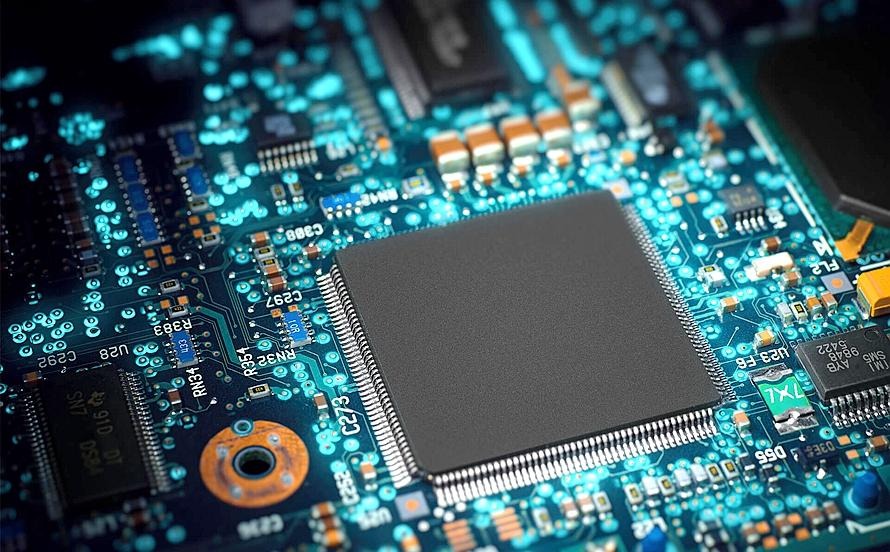
The global electronics industry continues to evolve at an extraordinary pace, driven by innovations in consumer electronics, automotive technology, medical devices, industrial automation, telecommunications, and artificial intelligence. Behind every successful electronic product is a reliable manufacturing process that transforms a printed circuit board into a fully functional electronic assembly. This process, commonly known as Printed Circuit Board Assembly (PCBA), is one of the most critical stages in electronics manufacturing.
As companies strive to reduce production costs while maintaining exceptional quality, many have turned to PCBA Manufacturers in China for complete manufacturing solutions. China has become the world’s largest electronics manufacturing hub, offering advanced production facilities, experienced engineering teams, and integrated supply chains capable of supporting projects ranging from prototypes to high-volume production.
In addition to assembly services, businesses often seek reliable PCB Manufacturers and Suppliers that can provide high-quality bare circuit boards, engineering support, component sourcing, and testing under one roof. Working with experienced manufacturers simplifies production management while improving efficiency and product reliability.
This article explores the importance of PCBA manufacturing, the production process, the advantages of sourcing from China, and the key factors businesses should consider when selecting the right manufacturing partner.
Understanding PCBA Manufacturing
Printed Circuit Board Assembly refers to the process of mounting electronic components onto a fabricated printed circuit board to create a complete electronic circuit. While PCB fabrication produces the physical circuit board, PCB assembly transforms that board into a functional product capable of performing its intended electronic operations.
The assembly process involves accurately placing components such as resistors, capacitors, integrated circuits, connectors, and semiconductors according to the circuit design. These components are then permanently connected through advanced soldering techniques to ensure reliable electrical performance.
Modern PCBA manufacturing relies heavily on automation, allowing manufacturers to assemble thousands of highly complex boards with exceptional speed and accuracy. This level of precision is essential for today’s compact electronic products that utilize miniature surface-mount components and high-density circuit layouts.
The PCBA Manufacturing Process
The manufacturing process begins after the printed circuit board design has been completed and fabrication files have been approved. Engineers review Gerber files, assembly drawings, pick-and-place data, and the Bill of Materials (BOM) before production starts.
For surface-mount assemblies, solder paste is applied to the designated component pads using precision stainless-steel stencils. Automated pick-and-place equipment then accurately positions electronic components onto the solder paste with remarkable speed and precision.
The assembled boards pass through carefully controlled reflow ovens where the solder paste melts and forms permanent electrical connections between the components and the PCB. For products requiring through-hole components, additional assembly processes such as wave soldering or selective soldering are performed.
Following assembly, each board undergoes comprehensive inspection and testing. Automated Optical Inspection (AOI), X-ray analysis, electrical testing, and functional verification help ensure every assembly meets customer specifications before shipment.
Throughout the manufacturing process, strict quality control procedures are maintained to minimize defects and ensure consistent production quality.
Why China Has Become a Global Leader in PCBA Manufacturing
China has established itself as the world’s leading destination for electronics manufacturing by continuously investing in advanced production technology, skilled engineering talent, and large-scale manufacturing infrastructure. Today, PCBA Manufacturers in China support customers across virtually every electronics industry.
One of the primary advantages of Chinese manufacturing is the country’s highly integrated electronics ecosystem. PCB fabrication, electronic component sourcing, assembly services, testing laboratories, logistics providers, and supply chain partners operate within closely connected industrial networks.
This integration significantly reduces manufacturing lead times while improving coordination between production stages. Companies can source components, fabricate PCBs, complete assembly, perform testing, and arrange global shipping through a single manufacturing partner.
Chinese manufacturers have also invested heavily in advanced automation, including high-speed placement equipment, intelligent production management systems, laser inspection technologies, automated optical inspection, and advanced quality assurance systems. These investments enable manufacturers to deliver consistent quality while maintaining competitive pricing.
The Role of PCB Manufacturers and Suppliers
Reliable PCB Manufacturers and Suppliers play an essential role in the electronics manufacturing process by producing high-quality circuit boards that serve as the foundation for electronic assemblies. Their expertise extends beyond simple fabrication to include engineering consultation, material selection, design optimization, prototype development, and production support.
Modern manufacturers produce a wide range of PCB technologies, including single-sided boards, double-sided boards, multilayer PCBs, High-Density Interconnect (HDI) boards, flexible circuits, rigid-flex PCBs, aluminum PCBs, ceramic boards, high-frequency PCBs, and heavy copper circuit boards.
Many suppliers also provide Design for Manufacturability (DFM) analysis to help customers optimize their PCB designs before fabrication begins. Early engineering support reduces production risks while improving long-term product reliability.
By offering comprehensive manufacturing solutions, experienced suppliers simplify supply chain management and allow customers to focus on product development and business growth.
Applications of PCBA Across Industries
PCBA manufacturing supports nearly every sector of the modern electronics industry. Consumer electronics manufacturers depend on assembled circuit boards for smartphones, tablets, laptops, wearable devices, gaming systems, smart televisions, and home automation products.
Automotive manufacturers rely on advanced PCB assemblies for engine control units, battery management systems, advanced driver assistance systems, infotainment platforms, lighting controllers, and autonomous driving technologies. These assemblies must perform reliably under continuous vibration and extreme temperature conditions.
Medical device manufacturers utilize PCB assemblies in diagnostic equipment, patient monitoring systems, imaging devices, laboratory instruments, portable healthcare products, and surgical equipment where precision and reliability directly impact patient safety.
Industrial automation systems, robotics, telecommunications infrastructure, aerospace electronics, renewable energy equipment, defense systems, and Internet of Things (IoT) devices all depend on high-quality PCB assemblies for reliable operation.
Quality Standards in PCBA Manufacturing
Quality assurance is one of the most important aspects of successful PCB assembly. Even minor manufacturing defects can affect product performance, reliability, and customer satisfaction. Leading manufacturers implement comprehensive inspection procedures throughout every stage of production.
Automated solder paste inspection verifies accurate solder deposition before component placement begins. Automated Optical Inspection (AOI) systems identify missing components, polarity errors, solder bridges, misalignment, and other assembly defects immediately after soldering.
For assemblies containing Ball Grid Arrays (BGAs) and other hidden solder connections, X-ray inspection provides detailed analysis of internal solder joints that cannot be inspected visually.
Electrical testing confirms circuit continuity while functional testing verifies that assembled boards perform according to customer specifications. Some manufacturers also conduct environmental testing, thermal cycling, vibration testing, and burn-in procedures depending on the application.
International certifications such as ISO 9001, IPC-A-610, UL certification, ISO 13485 for medical electronics, IATF 16949 for automotive applications, and RoHS compliance demonstrate a manufacturer’s commitment to global quality standards.
Choosing the Right Manufacturing Partner
Selecting a reliable manufacturing partner requires evaluating several important factors beyond pricing alone. Technical capability should match the complexity of the project, whether it involves multilayer boards, HDI technology, flexible circuits, controlled impedance, or miniature surface-mount components.
Engineering support is equally valuable. Manufacturers capable of performing Design for Manufacturability reviews help customers identify potential production issues before fabrication begins, reducing development time and manufacturing costs.
Production capacity should also align with business requirements. Whether producing prototypes, low-volume engineering samples, or high-volume commercial products, manufacturers should demonstrate consistent production quality and dependable delivery schedules.
Strong communication, transparent project management, responsive customer service, and long-term technical support further contribute to successful manufacturing partnerships.
Future Trends in PCB and PCBA Manufacturing
The electronics manufacturing industry continues to evolve alongside emerging technologies such as artificial intelligence, electric vehicles, autonomous systems, advanced robotics, wearable healthcare devices, and 5G communication networks. These innovations require increasingly sophisticated PCB designs and assembly capabilities.
Manufacturers are investing in smart factory automation, artificial intelligence-driven quality control, predictive maintenance systems, digital production monitoring, and precision robotics to improve manufacturing efficiency while maintaining exceptional quality.
Sustainability has also become a growing priority. Many manufacturers are adopting environmentally responsible production methods, energy-efficient equipment, waste reduction initiatives, and recyclable materials to support global environmental objectives.
As product complexity continues to increase, PCB manufacturers and PCBA providers will play an even more important role in enabling future technological innovation.
Conclusion
Choosing experienced PCBA Manufacturers in China provides businesses with access to advanced manufacturing technology, integrated supply chains, engineering expertise, and cost-effective production solutions. From prototype development to high-volume manufacturing, Chinese manufacturers continue to support global electronics companies with reliable, high-quality assembly services.
At the same time, trusted PCB Manufacturers and Suppliers provide the strong foundation required for successful electronic products by delivering precision-fabricated circuit boards, engineering support, and comprehensive manufacturing capabilities. By partnering with experienced manufacturers, businesses can improve product quality, shorten development cycles, optimize production costs, and confidently bring innovative electronic products to markets around the world.
